BlogThe AI Operating System
Why you know less about your company every year it grows
Every hire and tool adds a layer between you and the truth of your business. Why visibility decays as you grow, and what reverses it.
You know less about your company every year it grows because every hire, every new tool, and every new process adds a layer between you and the work. At ten people you saw everything, because you touched everything. At fifty or a hundred, the truth about your own business is scattered across a dozen systems and a dozen heads, and what reaches you is late, filtered, and summarised. Reversing that takes one place where the company reports itself to you daily, in plain words, without anyone building a deck.
Why do you see less as your company gets bigger?
Growth swaps direct contact for reported information. In the early years you were in the room for every sale, every complaint, and every hire, so your picture of the business was first-hand and current. Then you promoted people, which was the right move, and each manager became a filter between you and the floor. Filters summarise. They also soften, because nobody wants to bring the owner bad news on a Tuesday about a problem they hope to fix by Friday.
This is the ordinary physics of an organisation getting bigger, and nobody inside it is doing anything wrong.
Ask any hospitality owner who has gone from one venue to several. With one, they could walk the floor and know within minutes how the week was going. Across several, that same instinct runs on second-hand reports that are days old before they arrive. The judgement is as sharp as ever. The raw material it feeds on has decayed.
Where does the truth about your company actually live?
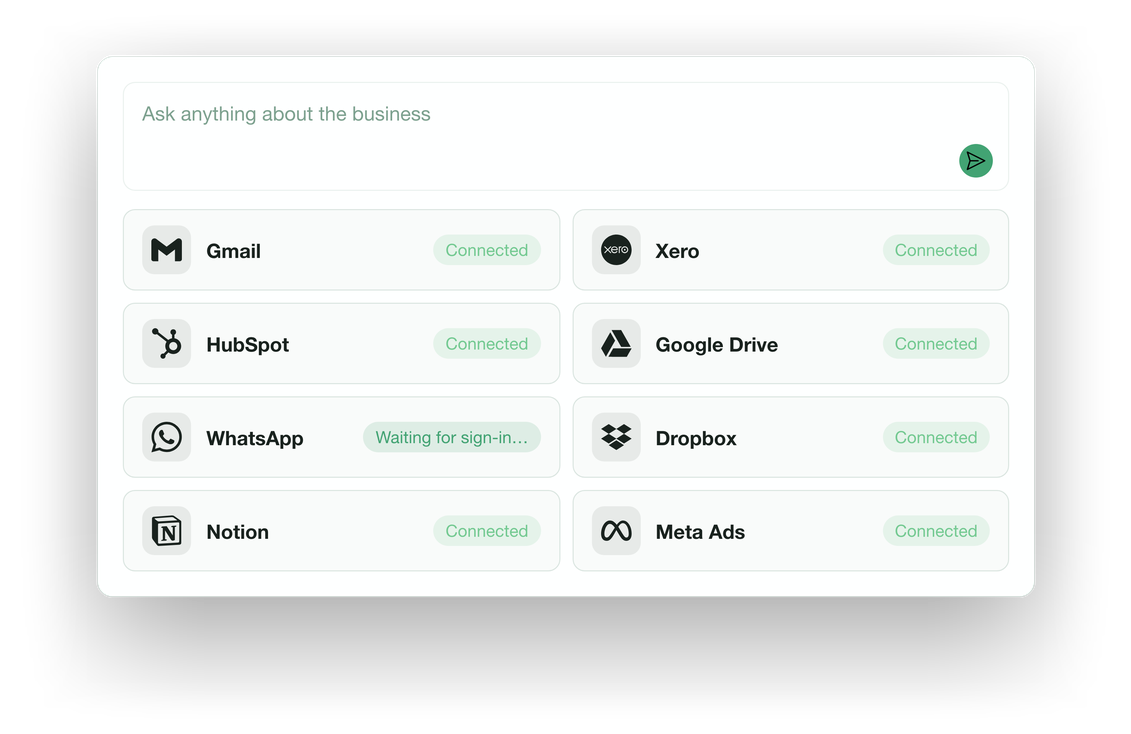
In slices. The accounts system holds one slice, the CRM another, and the project tracker, the spreadsheets, the shared inboxes, and the WhatsApp threads hold the rest. Nine tools, each confident it has the full picture, and none of them talking to each other. To answer one honest question about the business, someone has to open four of them and stitch a story together by hand.
The most important slice is in worse shape still. It lives in someone's head. Every legal and accounting firm has the person who just knows the real state of work in progress, which clients are drifting, and which fee is about to be questioned. Ask them and you get a superb answer in thirty seconds. When they are on holiday, that part of your company goes dark. An answer that lives in a head is an answer your business does not own.
Why doesn't monthly reporting solve it?
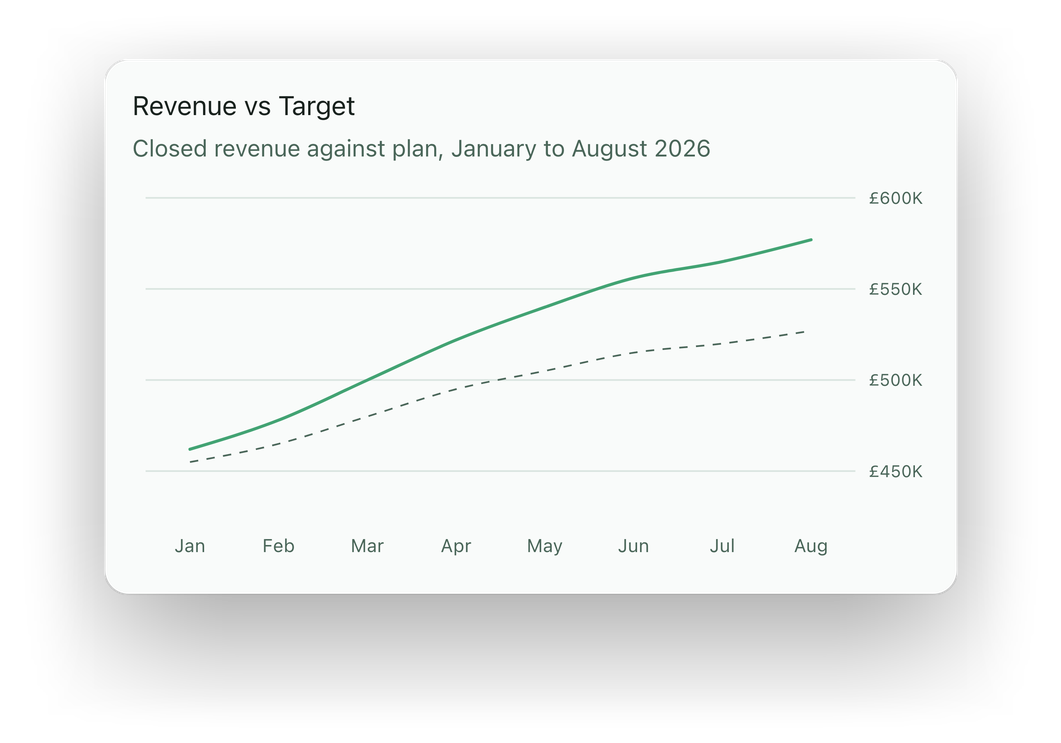
Because reporting, as most companies practise it, is a ritual of stale numbers assembled by hand. Someone spends days pulling figures from different systems into a deck. By the time you read it, the numbers describe a month that is already over. The report tells you what happened, when what you needed was to know what is happening.
Property development shows the cost most clearly. A scheme stalls quietly, and the delay surfaces at the monthly review, weeks after the cheap moment to fix it has passed. Nobody lied and nobody was lazy. The information simply had no route to the owner that was faster than the meeting.
So owners fall back on the only feed that is always on, which is anecdote and gut. Gut is a fine instrument. Fed on thin, late information, even the best gut starts guessing.
Is this a people problem or a plumbing problem?
Almost every owner I speak to diagnoses it as a people problem. The usual script goes: my managers don't communicate, we should meet more often, perhaps it is time to hire an ops director. I made exactly that diagnosis in my own companies, and I was wrong.
Running my own businesses on an AI Operating System taught me something I would never have believed from the outside. Once the plumbing was fixed, once information moved upward on its own every morning, the communication problem largely dissolved. My managers had never been hiding anything. They simply had no cheap way to move what they knew up to me, so it moved slowly or stayed put. The clearest sign was that my own questions changed. I stopped opening conversations with "what is going on with this", because the what was on my phone before breakfast, and started opening with "why is this happening", which is a conversation actually worth having. If more meetings and better managers have never fixed your visibility, the pipes were the problem all along.
What does it take to reverse the decay?
One place where the company reports itself, every day, in plain words. That is the whole design brief, and every part of it matters.
In practice it means connecting the tools you already have rather than replacing them. The accounts package, the CRM, the project tracker, and the inboxes all keep doing their jobs. An AI layer sits across them, reads what has changed, and writes it up the way a good chief of staff would, in sentences a person wants to read. That is what the AI is actually for here, reading everything and writing plainly, rather than anything exotic.
The daily cadence does the quiet heavy lifting. A problem that surfaces the morning after it starts is small and cheap to fix. The same problem surfacing at a monthly review is a history lesson. The difference between those two moments is most of the value.
What does that look like day to day?
Each morning a short brief arrives on your phone. It reads the way a sharp colleague would write it: cash position, pipeline movement, anything overdue, anything unusual, and the two or three things that need your attention today. When something raises a question, you ask in plain English, the way you would ask a person, and you get an answer drawn from the live state of the business, because the system knows your business.
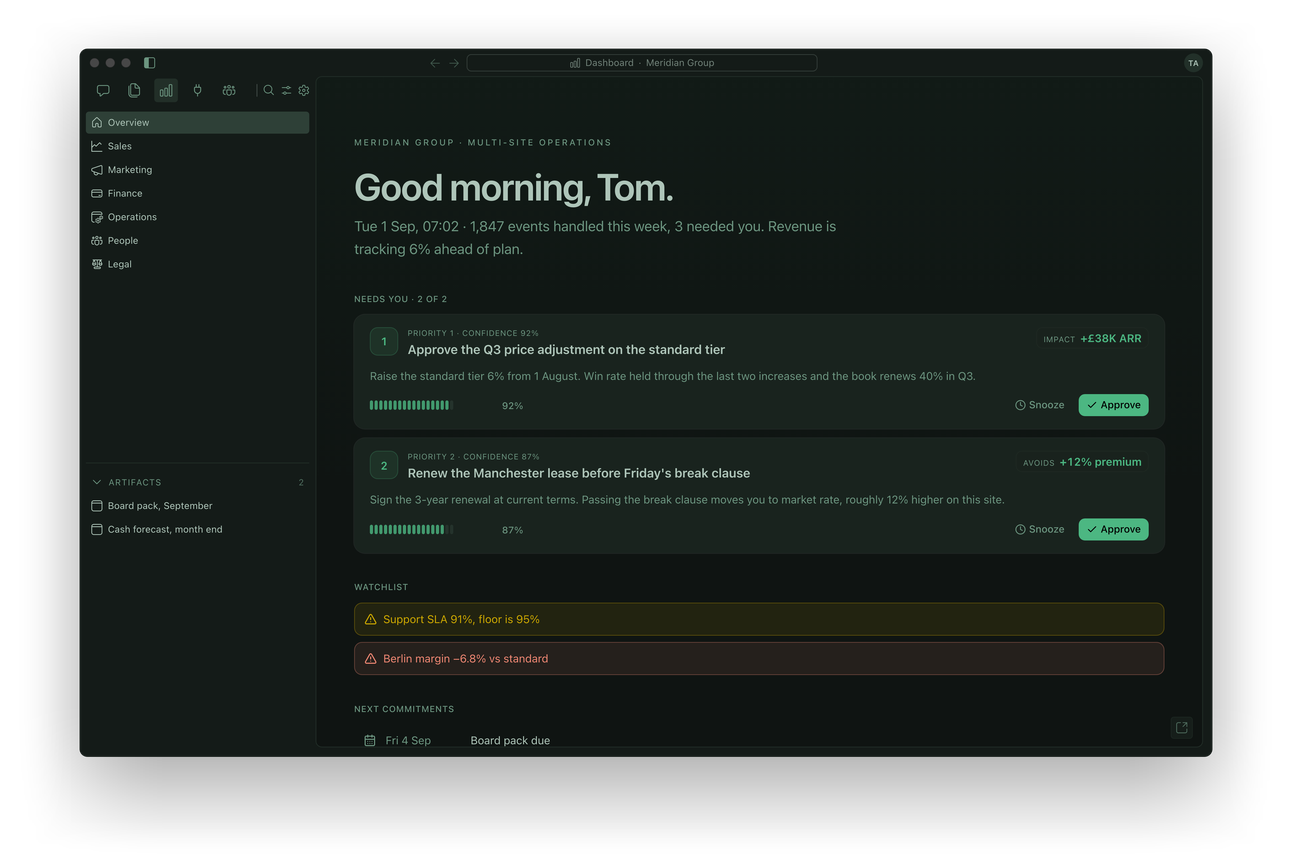
Behind the brief sits one screen that shows the whole company at once, live rather than a month old. And when the system proposes an action, chasing an overdue invoice, drafting a reply, flagging a stalled job, it waits for a human to approve it first. Nothing goes out without a yes from a person.
In a recruitment firm the inbox is usually where this bites. Messages arrive faster than anyone can sort them, and good candidates go cold in the queue. With the sorting and the draft replies ready before the team sits down, the consultants spend their day on calls, which is the work that wins fees.
Will your team have to learn new software?
No, and this is deliberate. The system meets your team where they already work, so nobody logs into a new tool, sits through a training day, or changes how they file things. Most failed software rollouts die at the same point, the moment they ask busy people to change their habits, and we designed around that from the start.
Nobody loses their job to it either. The hire you avoid is the next one, the person you would have added to carry the assembling and chasing. The point is to strip out the assembling, chasing, and re-typing that eats everyone's week, so your people can spend their hours on judgement, relationships, and craft. A marketing agency's account managers still own their client relationships. They just stop spending their evenings compiling status updates that were out of date by Monday morning.
Who builds it and keeps it running?
We do. Imperium installs the system inside your business, on site, working with your team and your data until the brief lands every morning and the screen tells the truth. Then we run it and improve it every month, for a monthly fee, because a company is a living thing and the system that watches it has to keep learning. I run my own companies on it, and have done since before we offered it to anyone else. Every improvement we ship gets tested on us first, which keeps us unsentimental about what actually works.
If you would like to know what your company would look like on one screen, the three-minute audit is where we start.